

“What a rotten deal we made with Iran. We get nothing (except laughter at our stupidity). They get everything, including delay and big cash!” - Donald Trump in 2013.
Surrenders are rarely as categorical as this one.
We went to war with no debate, no Congressional approval, and no notice. A foreign leader, Bibi Netanyahu, chose the timing by assassinating the entire leadership of the Iranian regime, thereby making the war an existential one for the IRGC, and all but forcing the US to join in. The US subsequently displayed its full and unequaled military might, raining missiles and bombs all over the country, demanding “unconditional surrender.”
And the surrender, a few short months later, is ours.
You can try to put some lipstick on this porcine disaster — the dead-enders are still trying — but the reality is something even the hasbarists can’t quite spin. The Iranian regime is now domestically stronger than before, more radical, and more confident. Yes, they have suffered real damage to their military infrastructure — duh — but we have depleted a dangerously huge amount of our own global arsenal as well, alienated every major ally, given Russia a windfall, gut-punched the global economy, and isolated Israel more profoundly than in its entire history. We’ve also shown America’s military might is useless if divorced from strategy: Vietnam all over again.
And for what? A few promises the mullahs have made before, and future negotiations with less leverage than Obama had. In return, they will get immediate relief from sanctions of all kinds, new de facto leverage over the Strait of Hormuz (a future revenue stream), greater freedom of action in Lebanon, and up to $300 billion in unfrozen funds and reparations — six times the sum Obama delivered for a better deal.
And at Versailles, Trump frankly explained why: the blockade of the strait was leading to a global economic crash and he didn’t want to usher in a new depression. So he caved. In other words, the most bleedingly obvious tactic Iran could have used — a tactic every previous president had weighed as a reason not to go to war — was used. And our entire plan was dependent on their not doing that for some reason. And once they did, we were fucked. It’s really not a lot more complicated than that. Laughable incompetence.
We never had more than a third of Americans backing this thing — as the IRGC well knew — so it was always vulnerable without sudden total victory. That’s why the Founders wanted deliberation and debate before launching a war. But the mad king, enabled by his party to operate outside all restraints, went ahead anyway, pumped from his Maduro adventure. Not since he was forced to capitulate to Xi on trade — because he hadn’t foreseen the bleedingly obvious relevance of China’s control of rare earths — has the US been so globally humiliated.
And yes, the word is humiliation. Just the manner of the conduct of the war — a deranged, manic autocrat, lurching forward, back and sideways, day and night, alongside a defense secretary whose utterances were as moronic as they were callous — was damning enough. But the lack of any strategy apart from “bomb them till they cry uncle” was as obvious to the world as it was to the IRGC.
In a dizzying performance of reckless, feckless incoherence, Trump went from demanding “unconditional surrender” and threatening the death of a civilization to saying that Iran has a right to ballistic missiles, there’s no real need to remove the remaining nuclear material, and that “Hamas actually behaved pretty well.” More Henry VIII than George Washington. But much, much dumber.
Who will be held accountable for the greatest foreign policy disaster since Iraq? No one, of course. Trump is incapable of shame and no one has been fired, and most of the neocons who have been pushing this war for decades will never apologize, and never explain. They will simply shift the blame to Trump, or Vance, rather than examine their own delusions, errors of judgment, and obsessions. It’s just who they are. In this dying empire, the architects of rank failure always thrive.
The silver lining, however, is that the American public never wanted this bullshit war, and saw right through it. It only ever made sense from the vantage point of a foreign country, and no one can begrudge the Israelis’ attempt to con a gullible president into fighting their war. But Americans, unlike so many in the foreign policy elites, tend to put their country first. And this debacle will almost certainly help to entrench that.
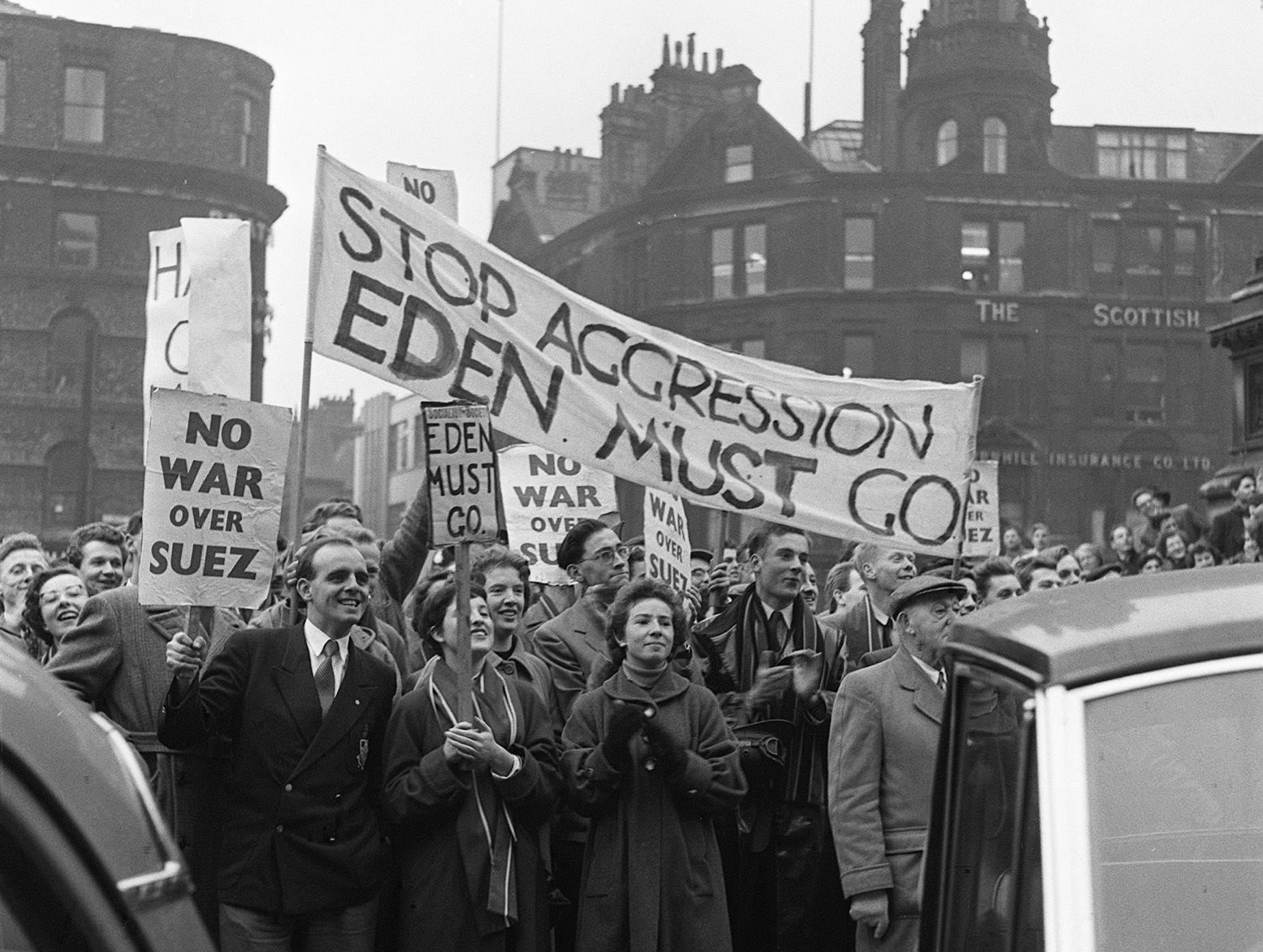
Which is a good thing. A certain clarity can come from losing a war of imperial overreach. In Britain and France in 1956, a very similar humiliation in the Middle East, after a very similar act of rash aggression, was what those countries’ elites needed to break them of any remaining delusions of their great power. Today’s crushing defeat in the Middle East for the US is not on the same level as Suez was for Britain, but it’s definitely in the same direction: a symptom of unsustainable overreach. We can be pretty sure now that if military failures don’t end this empire, the bond markets will. So serious retrenchment is the prudent course.
The neocons and evangelicals who fetishize Israel will, of course, continue their campaign to keep the US tied down in the Middle East forever. But this war, as I predicted in February, will be “the last war for Israel.” Why? Because, quite simply, the American people have had enough of having their own interests subordinated to the niche manias of elites and the plans of foreign countries. Even DC’s foreign policy Blob is starting to see the urgent need for an end to hubris and a return to realism.
Which is why the new tone from Trump and Vance this week is so revealing. Here’s Vance on Israel: “You’re a country of 9 million people. You can’t just kill your way out of solving every single national security problem that you have.” And Trump: “I think [Israel] could do better … I’m not saying they shouldn’t protect themselves. I’m saying when two drones are shot into the desert and drop harmlessly, you don’t have to knock down buildings in Beirut. They could behave better.” Hard to imagine a previous president or veep saying something like that. Hard to imagine a future president saying anything much different.
And the low-tech resistance of the IRGC is of an encouraging piece with the drone innovations of the Ukrainians. Big superpowers with massive arsenals always have the option of aggression. Putin has Ukraine and the Baltics in his sights; Trump has Venezuela, Cuba, Greenland, and Iran. But smaller powers are gaining some traction against these ugly empires. A few more defeats like Ukraine and Iran and we’re talking.
That’s the only reason China should think twice before trying to take Taiwan. Not that the US will prevent them — it seems clear to me, especially now, that Americans will never back a new war that far away without a direct threat to them. Merely that there are new ways to stymie powerful belligerents, as the Ukrainians and IRGC have shown. That might inhibit war after a few years of disinhibition. It might tame the rogue superpowers. Or — who knows? — we can elect a president next time who’s fit for the office.
All of which is to say that Trump in the end did the obviously right thing. After doing the obviously wrong thing. And in a polity as deeply dysfunctional as ours, that’s a rare and welcome correction, worthy of some relief. So can we now finally refocus on Asia and Russia, and add some real conditions to aid for Israel? And either reform that toxic, mutually damaging alliance for good, or finally, mercifully, move on?
(Note to readers: This is an excerpt of The Weekly Dish. If you’re already a paid subscriber, click here to read the full version. This week’s issue also includes: a talk with Tiffany Jenkins on the role of privacy in a liberal democracy; listener dissents on the Dan McCarthy pod on Trump and conservatism; reader dissents over my piece on the UK riots; 12 notable quotes from the week in news, including four Yglesias Awards; 17 pieces on Substack we recommend on a variety of topics; a Mental Health Break of a joke candidate in the UK; a summer window from Weimar; and, of course, the results of the View From Your Window contest — with a new challenge. Subscribe for the full Dish experience!)
From a new paid subscriber:
I’ve been a freebie subscriber for a while, and I appreciate the generous serving of content you provide at that level. But I want to use your work more extensively as a source for my own opinion writing, so I’m ponying up the dough for a subscription.
Another newcomer writes, “I support your work because you aren’t afraid to oppose the lunacy of both left and right.”
New On The Dishcast: Tiffany Jenkins

Tiffany is a cultural historian, writer, and broadcaster. She has been a critic and presenter on BBC Radio 4 and now serves as a trustee of the British Museum. Her latest book is Strangers and Intimates: The Rise and Fall of Private Life. It’s a fascinating book of history and political insight: how privacy is deeply connected to liberal values, and why its abeyance matters.
Listen to the episode here. There you can find two clips of our convo — on the first sexual revolution in England, and when privacy strengthened patriarchy. That link also takes you to commentary on last week’s pod with Daniel McCarthy and the recent one with Jerusalem Demsas. Readers also discuss Sam Harris on Israel, the race riots in the UK, and more on the LGB/TQ+ divide, with my replies throughout.
Browse the Dishcast archive for an episode you might enjoy. Coming up: Bob Wright on the evolutionary force of AI, John Gray on Trump’s new world, Stephen Grosz on the struggles of love, David Thomson on cinema history, John O’Sullivan on conservatism, Robby George on all our disagreements, and Megan McArdle on everything. Please send any guest recs, dissents, and other comments to dish@andrewsullivan.com.
Dissents Of The Week
From a reader on last week’s column:
A powerful piece on the current racial tensions in the UK, but I have to challenge your account of the Henry Nowak murder, which seems to have been informed by some of the right-wing commentators over here seeking to exploit the case for their own ends.
To say that the police who attended were “right out of woke central casting” is absurd. Let’s leave aside the consideration that, when a Sikh man claimed to have been racially assaulted, officers with experience of policing Southampton did not find this implausible. Or the context that British Asians are less likely to be involved in violent crime than the white population, let alone the Afro-Caribbean one.
The fact was that — as you report — Digwa didn’t stab Nowak and do a runner. Digwa’s brother called the police, and he, Digwa, and their mother remained at the scene — not something you’d expect a murderer to do. When the police arrived and were told “this bloke attacked me; I knocked him down and restrained him; here he is,” they had no reason to disbelieve that. So they put the handcuffs on, but then quickly realised that Nowak had been seriously injured — fatally injured, as it turned out.
Digwa was promptly arrested and the law took its course. The officers could have shown more professional curiosity, to be sure, but this was an explicable blunder on what was doubtless a busy night — not some civilisation-threatening disaster caused by immigration and DEI, whatever your vice president might say. And to call those officers “racist cops” is nuts.
My point about “central casting” is that the tape uncannily echoes many of the two-tier critiques of British policing, valid or not. The point about “racist cops” is that they first assumed certain facts based on the races of the two men involved but other factors — like the false cover story — were also relevant. I stand by my account of the murder. Another reader adds:
I don’t know if you saw Cathy Young’s critique of the narrative in the Nowak murder case, specifically the idea that he “bled out” in the presence of the cops, but I would recommend it. Because the damage to Nowak was largely due to internal bleeding, and the cops didn’t notice it or respond like someone bleeding to death. Not an excuse, but I thought Young’s take to be nuanced.
A detail worth noting, yes. But no excuse, as Cathy also notes. More dissents are on the pod page, and please keep the criticism coming: dish@andrewsullivan.com. You can follow more Dish debate in my Notes feed.
In The ‘Stacks
This is a feature in the paid version of the Dish spotlighting about 20 of our favorite pieces from other Substackers every week. This week’s selection covers subjects such as the White House UFC event, the G7, and more anti-speech cases from Europe. Examples:
Lisa Selin Davis covers the FTC lawsuit against WPATH over child sex-changes.
Bethel McGrew venerates the “manly suffering” of Ben Sasse.
Copyranter compiles more non-PC ads.
Here’s a list of the substacks we recommend in general — call it a blogroll. If you have any suggestions for “In the ‘Stacks,” especially ones from emerging writers, please let us know: dish@andrewsullivan.com.
The View From Your Window Contest

Where do you think it’s located? Email your guess to contest@andrewsullivan.com. Please put the location — city and/or state first, then country — in the subject line. Proximity counts if no one gets the exact spot. Bonus points for fun facts and stories. The deadline for entries is Wednesday at 11.59 pm (PST). The winner gets the choice of a VFYW book or two annual Dish subscriptions. If you are not a subscriber, please indicate that in your entry and we will give you a free month subscription. Contest archive is here. Happy sleuthing!
The results for this week’s window are coming in a separate email to paid subscribers later today. From last week’s contest, here’s our CO/NJ super-sleuth introducing a fantastic new feature for the VFYW:
For a long time now, I’ve thought it would be cool to produce a flyover video of the window location for my submission, but I just have not gotten around to doing it. This week I finally taught myself how to produce the video, so I’m submitting my first one. It’s a 14-second journey from my home, around the world, to this week’s location:
See you next Friday.