(For the View From Your Window contest, the results below exceed the content limit for Substack’s email service, so to ensure that you see the full results, click the headline above.)
Woohoo! I’d love the book. I want to keep paying for the Dish and thereby keep the option to cancel when Andrew infuriates me — which hasn’t quite happened yet in the 20 years or so that I’ve followed him.
Our super-sleuth in Louisville takes issue with something from the Lexington contest:
Sorry, Chris, I hate to be a pot-stirrer, but I have to request a formal correction (but in fairness it does come with a bit of a historical anecdote). Last week a sleuth stated:
And my understanding is that Lexington has now surpassed Louisville as the most populous and economically vibrant metro area in Kentucky, not to mention the bluest. (It is a college town.)
Um, that’s a hard no on all accounts. Louisville is over twice the size of Lexington— both in terms of population (1.3M vs. 500K) and GDP ($90B vs. $36B). As for politics, Kentucky has six congressional districts, and the sole district represented by a Democrat (Morgan McGarvey) is basically the city of Louisville. ‘Nuff said.
As for the anecdote, I will concede that Lexington could actually claim to be the biggest city in Kentucky for a short while in the early 2000s, but only on a technicality. In the 1970s, the city of Lexington and Fayette County (where Lexington is located) merged their governments, so the “city” of Lexington is basically the entire county. Louisville later did the same, but not until 2003, so for a few years prior to that merger, Lexington was technically larger than Louisville, while Jefferson County, where Louisville is located, was still 2-3X greater in population.
Fun Fact: when looking up populations, I found out that the city of Louisville is technically bigger than the city of Atlanta — despite the fact that there are significantly more people in the Atlanta metro area than the entire Commonwealth of Kentucky.
Another correction comes from our CO/NJ super-sleuth:
One of your sleuths wrote that Thomas Jefferson was governor of Kentucky in 1780 — a fact that he was unaware of. I was also unaware of this and very surprised. Turns out that it is not true. I think the confusion stems from the fact that Jefferson was governor of Virginia during this time and, in this position, had a great deal of influence on the early development of Kentucky — which didn’t become a state until 1792.
Our super-sleuth in Eagle Rock writes, “Well, after the especially fascinating architecture report last week, now I want a photo tour of that sleuth’s carriage house.”
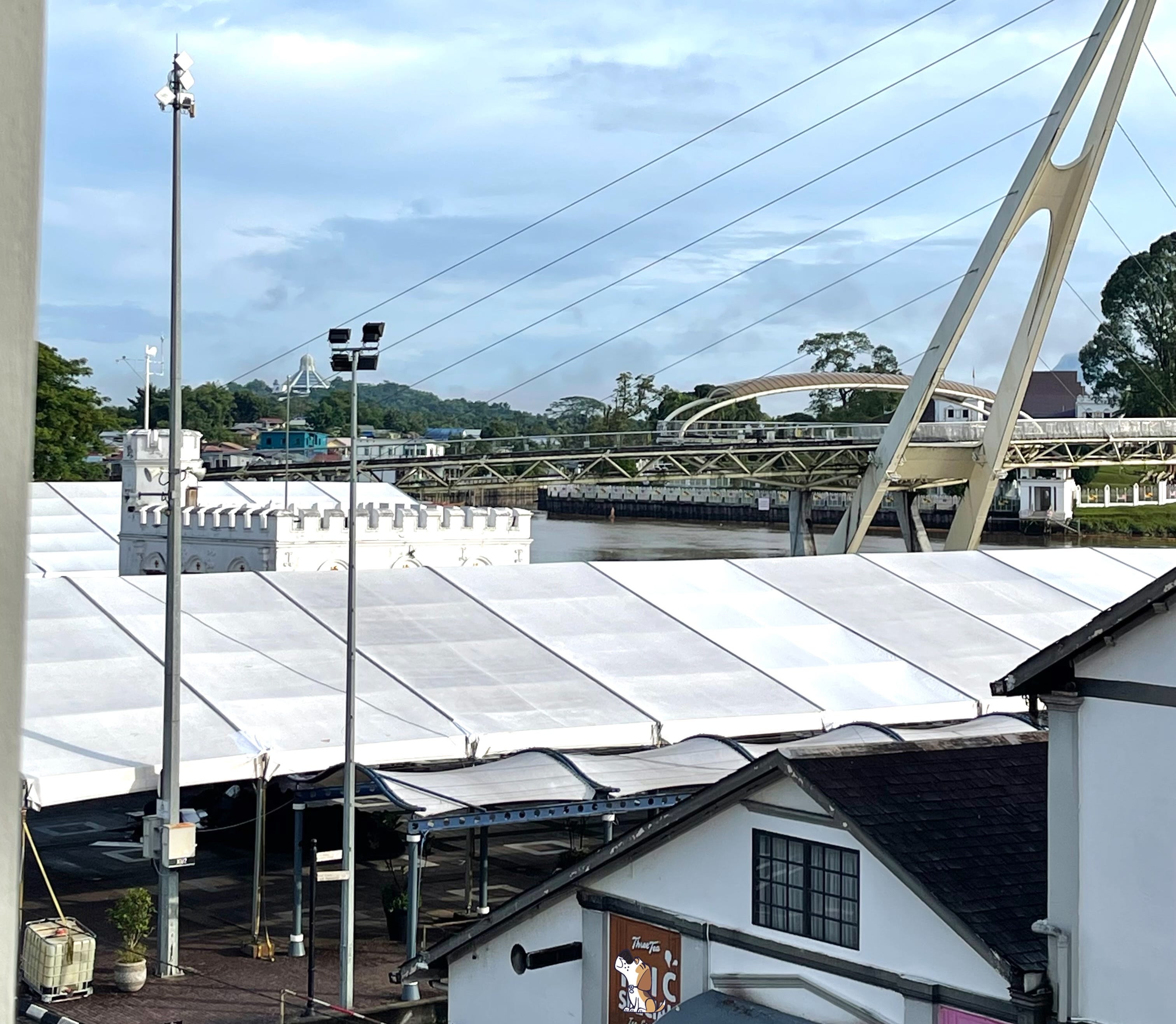
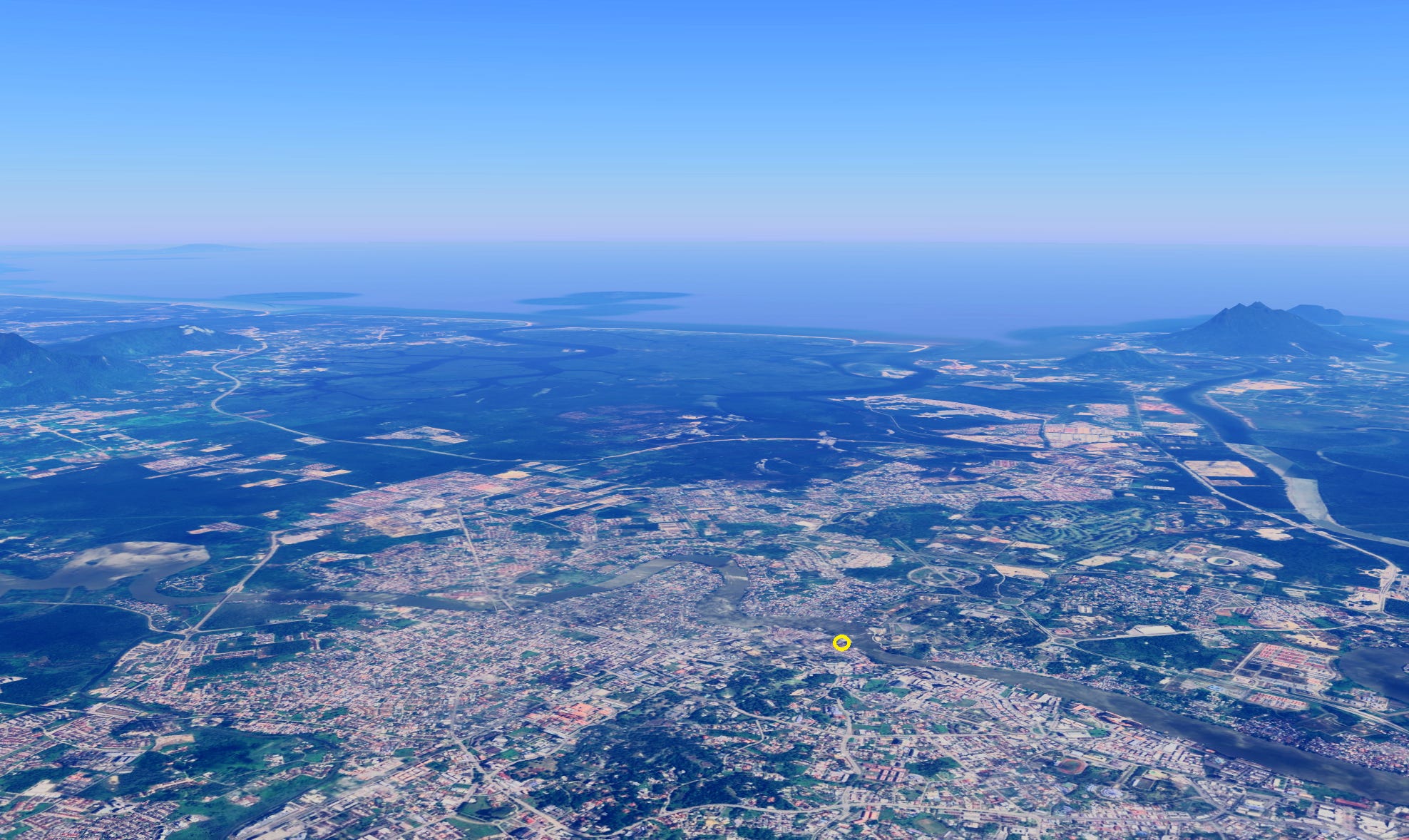
On to this week’s view, Chini reveals the city — a photo of it, at least:
Here’s a guess from our super-sleuth in Alexandria:
This week I’m unconfidently guessing that the window is somewhere on Montreal Island in Montreal, Canada. I remember being there, years ago, near that weird biosphere building, and there were a lot of pavilions with white structures everywhere ... and the view kinda looks like that atmosphere.
Hope you enjoy the snow this weekend — can’t wait!
Driveway salted! And it’s a steep one. It’ll be the first winter storm for our house in the woods, and we have two wood-burning stoves if the power goes out.
Our Burner super-sleuth spots a clue — or just gets nostalgic:
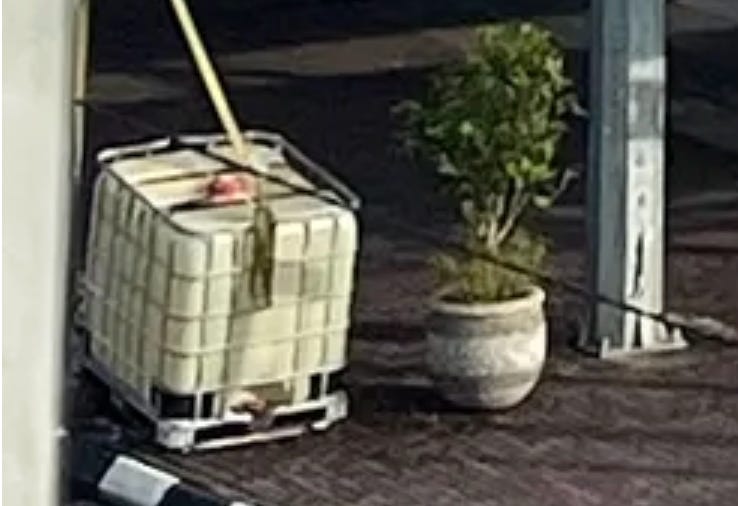
As I was perusing (original definition: to investigate deeply) the VFYW, I couldn’t help but notice there is a bit of Burning Man in the lower-left corner!
Everyone at Burning Man uses these industrial tanks to receive their water. For my first Burn, I brought all my water, but for my last Burn many years later I basically had unlimited water (delivered every other day).
Next up is last week’s winner, a sleuth in Hell’s Kitchen (the NYC neighborhood I happened to move to right after college):
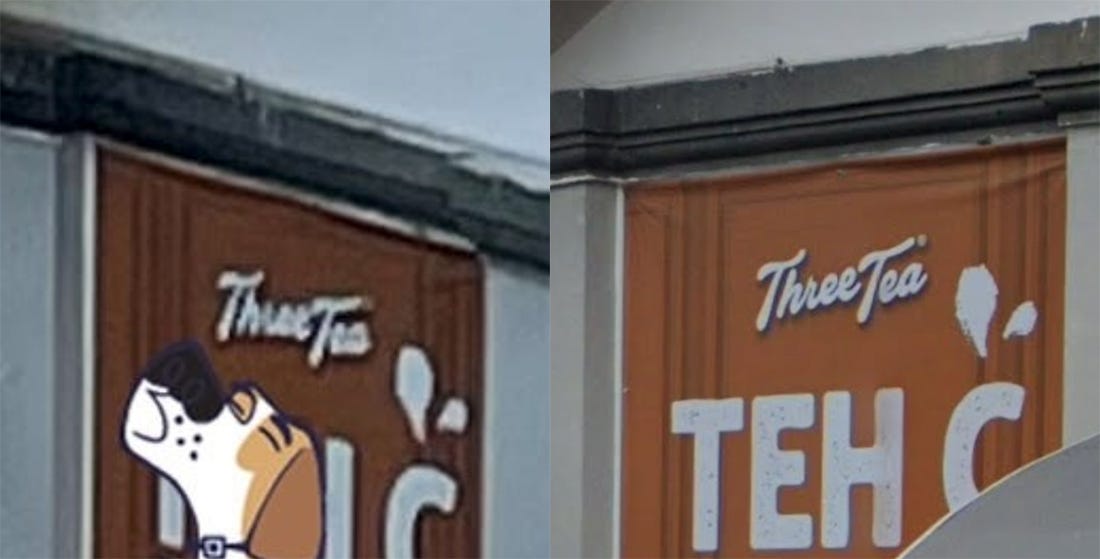
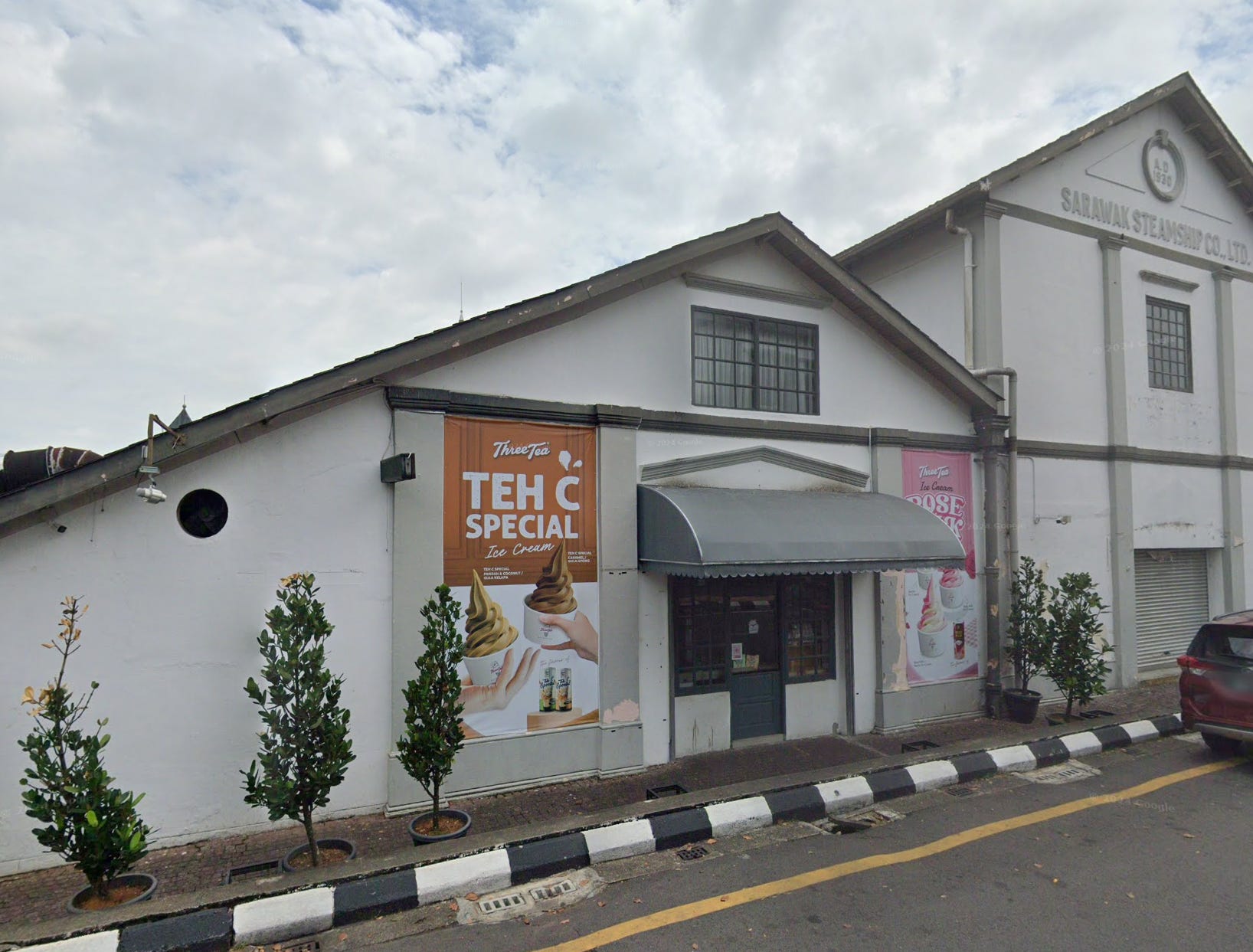
At first I thought the sign on the building across the street read “Truss Tea,” which turns out to actually be a brand of beer made in a microbrewery in Canada. The logo didn’t match, though, and this view didn’t give many Great White North vibes.
Clearing up the sign is Giuseppe, our super-sleuth in Rome:
The amazing transformation of “Three Tea” (a South-East Asian brand of tea) into “Thist Tea” (or something like that) is what I’ll remember about this contest. An effect of low definition and JPEG compression, probably — or maybe of Dusty’s magic powers?
San Mateo adds:
Here’s the Tree Tea Ice Cream shop without Dusty:
What’s “Teh C” exactly? It’s a milk tea popular in much of Southeast, characterized by the use of evaporated milk instead of condensed milk. Our super-sleuth in Ridgewood went searching for it:
I wanted to see if I could find this tea in New York City, and apparently it’s available at a spot in Flushing called Papparich. They call it a “three layer tea,” but it’s basically Teh C. (“Teh” just means tea, and the “C” refers to Carnation-style evaporated milk.) It’s served in a tall glass with distinct layers, almost like a sundae: a dark amber sugar syrup at the bottom, a band of creamy white evaporated milk in the middle, and a layer of black tea on top. You’re supposed to stir it together over ice before drinking.
If I make it out to Flushing, I’ll report back on how it is!
Our super-sleuth in Sydney gets an appetite — and names the right country:
This week’s recap is going to be a good one. I love a good Char Koay Teow — a popular stir-fried noodle dish in Malaysia — so here’s hoping someone comes up with a recipe! Might go well with the ice cream that Dusty is covering up.
Our previous winner in Sherman Oaks focuses on the bridge in view:
This contest took a real brute force effort.
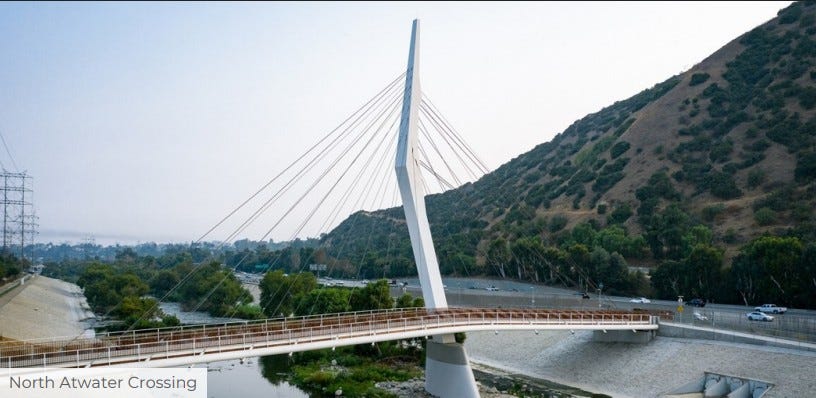
The single pylon cable for the bridge looked familiar to a pedestrian bridge in Los Angeles. As you go south on the 5 Fwy towards downtown, you will see what is officially called the La Kretz Bridge but locally known as the Atwater Bridge:
A philanthropist donated $4.75M in 1998 to build the bridge, but by the time construction started in 2017, the budget for construction had reached $16.1M, with tax payers paying the difference. GOVERNMENT, am I right?
I also learned that type of bridge is a cable-stayed steel pedestrian bridge, where the cable supports attach directly into a pylon, as opposed to a cable suspension bridge, where the support cables attach to a larger cable — e.g. the Golden Gate Bridge.
But looking closely at the VFYW photo, I could tell it’s in the tropics and probably in Southeast Asia — maybe India, based on the trees. I also guessed it was probably a former colony, based on the fortress-type structure with ramparts. So it might be easy to find cable-stayed pedestrian bridges in Southeast Asia.
How many can there be? Well, apparently they’ve been all the rage in the last 20 years, so there are literally hundreds. I narrowed my search by countries and did a Google search. No luck in Thailand, Indonesia, Singapore, Vietnam or Malaysia.
Then I tried just pedestrian bridges in each country, and still had no luck — though I did come across an old webpage from a tour guide named Timothy who had pictures of all the pedestrian bridges in Penang, Malaysia. He seemed really proud of those bridges:
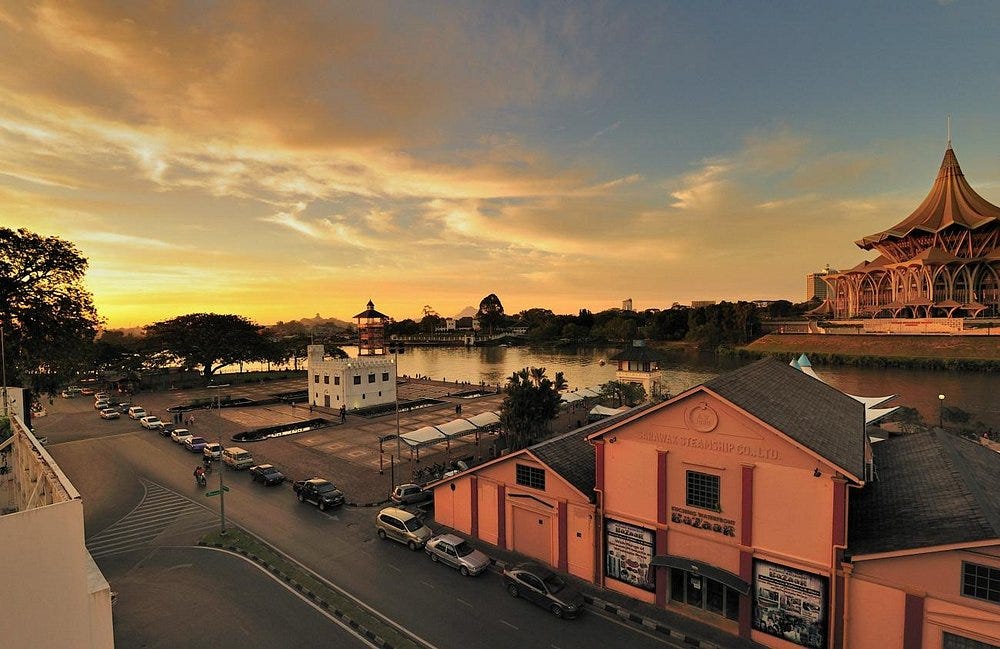
Just clicking through random results, I came across the Wiki for the “List of Bridges in Malaysia,” and there in the #4 spot something caught my eye. Not the unique pylon, but the little covered basket observation deck in the VFYW photo. I didn’t see any other bridge with that feature. So I found it: the Darul Hana Bridge.
I also found a photo similar to the VFYW taken in 2014, before the bridge was built:
The A2 Team in Ann Arbor reveals the right city in Malaysia:
Thank you for another interesting puzzle. The A2 Team found it in five minutes, although we still don’t exactly know how.
Continue reading this post for free, courtesy of Andrew Sullivan.