(For the View From Your Window contest, the results below exceed the content limit for Substack’s email service, so to ensure that you see the full results, click the headline above.)
No way!!! I thought I would have to build up multiple more correct window guesses to win a future tie-breaker! Definitely the book please!
Here’s another recent winner after receiving his prize in the mail:
Thank you so much for the book! It’s fun paging through window views from long before I participated in the contest! It will find a permanent place at the sitting table in our guest room, where visitors may be intrigued and we can let them know where to subscribe and take part in the weekly hunt!
Here’s a followup from our super-sleuth in Vancouver, WA:
Thank you for using my Mošćenice view for the latest contest. It was so fun to read all the entries by the other sleuths! It was like seeing my vacation through many other sets of eyes. Your contest brings out the most interesting researchers and writers; I am constantly amazed. Now that I hit the trifecta (view featured, contest won, super-sleuth status), I was thinking it’s time to rest on my laurels, so to speak, but I couldn’t resist the contest again this week.
Next up, a “small correction” from the Yakima super-sleuth:
San Mateo and I were clearly thinking along the same (ridge)lines, but you misattributed part of my entry to him/her in the latest writeup. No need for any public mea culpa, unless San Mateo also complains.
Boy does he:
That entry WAS NOT from me! I didn’t write that. At least I don’t remember writing that. So, is there a San Mateo super-sleuth impostor? Is there now another San Mateo super-sleuth? Or is there a new San Mateo super-sleuth and I have been demoted to non-super-sleuth? Or, as I suspect, is this irrefutable evidence of the multiverse?
Just a typo on my part. Though I’d love to see a woman-of-color version of Andrew in the multiverse:
Here’s one more followup, from our resident biologist:
Happy last month of summer! I hope you’re having a great time in the new house.
It was fun to read about South Africa’s surfing scene and look at those amazing waves, and to be reminded to pick up some Amarula. I first had it on a flight from Tanzania on my birthday (longest birthday ever) and was hooked. Now I have to look up that Amarula-Kahlua mixture, as they are two of my faves.
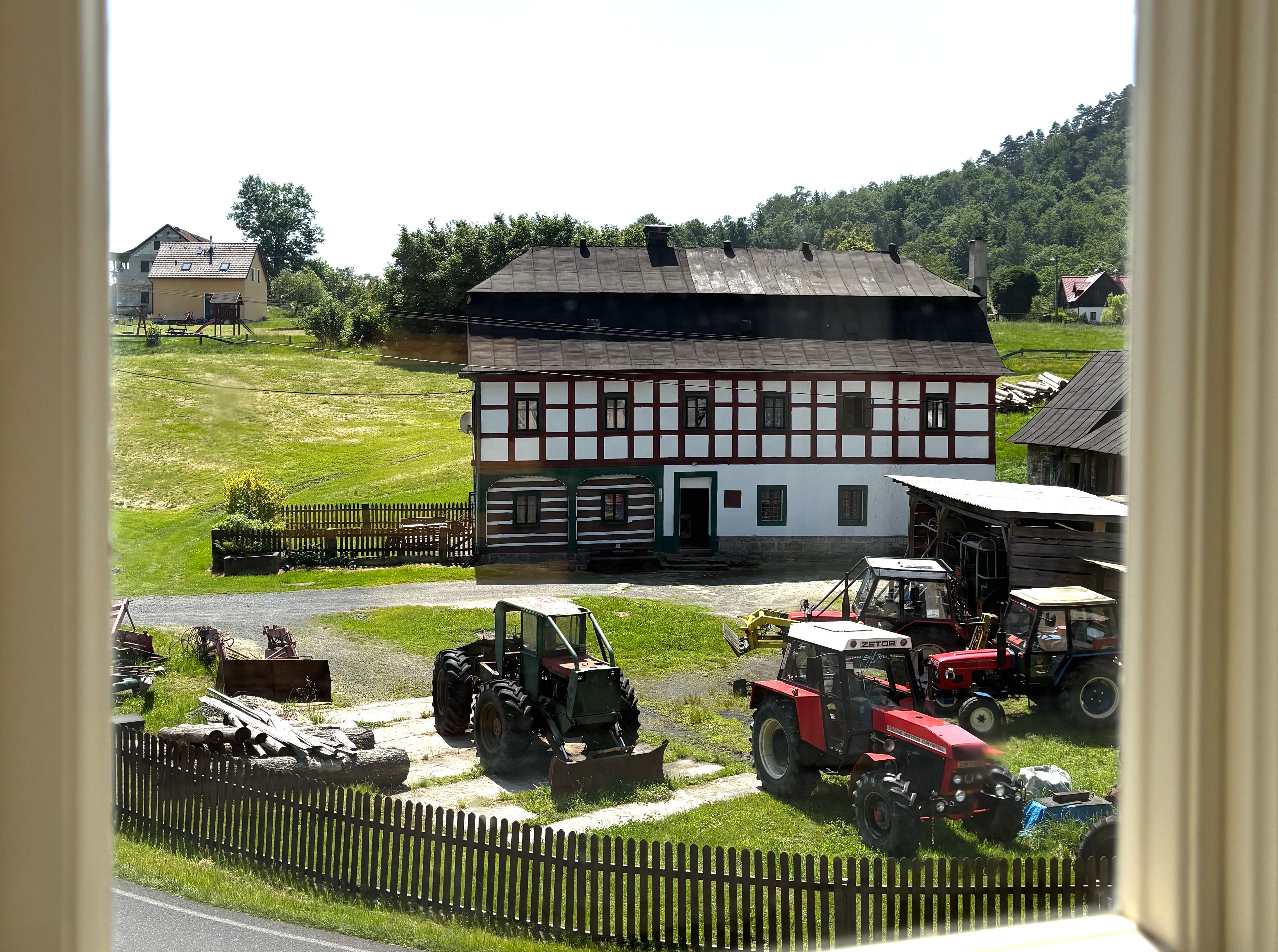
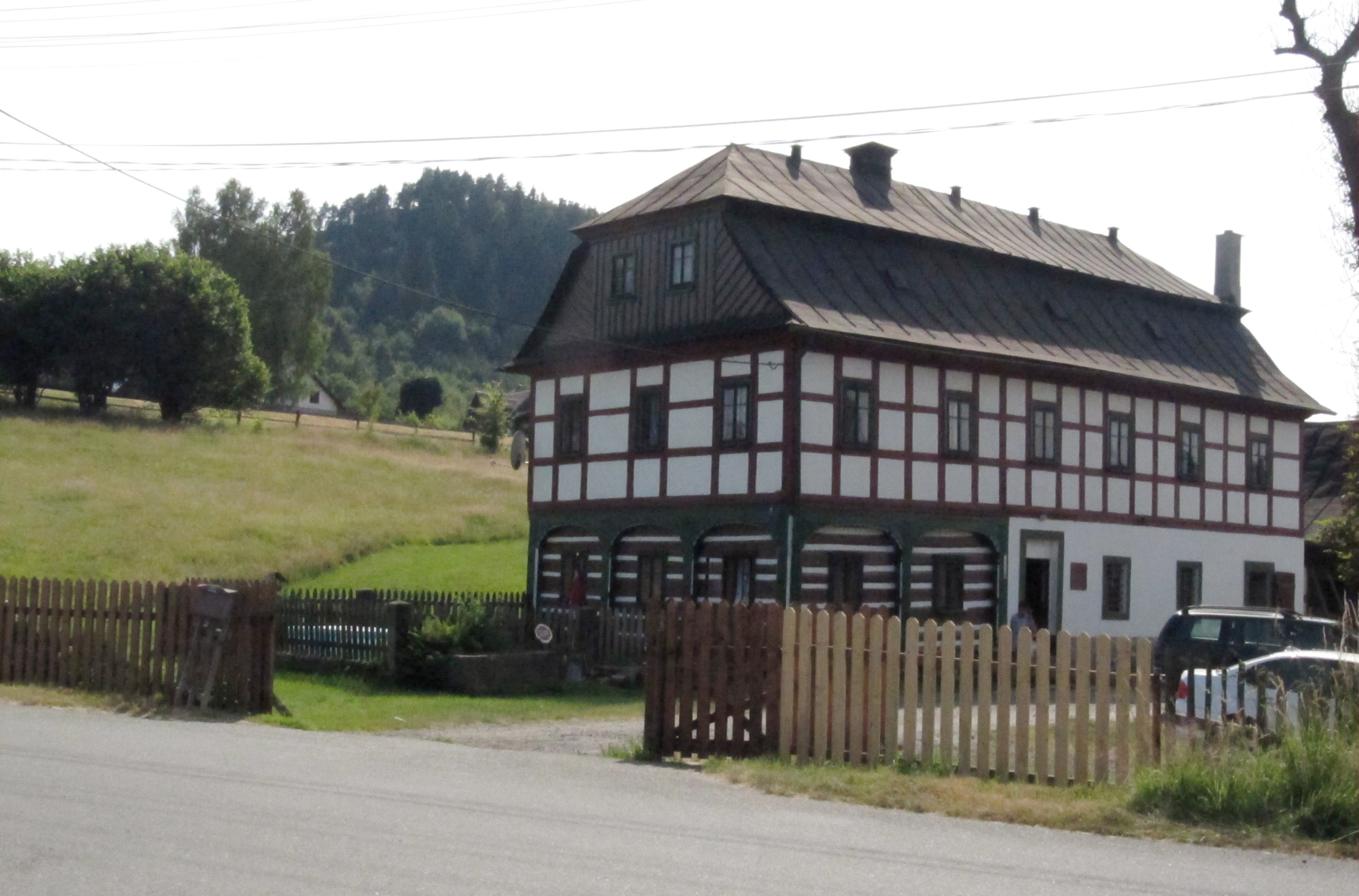
On to this week’s view, our super-sleuth in Bethlum writes, “Another week, another possible rabbit hole — and this one for the tractor aficionados.” One of them is not the super-sleuth in San Mateo:
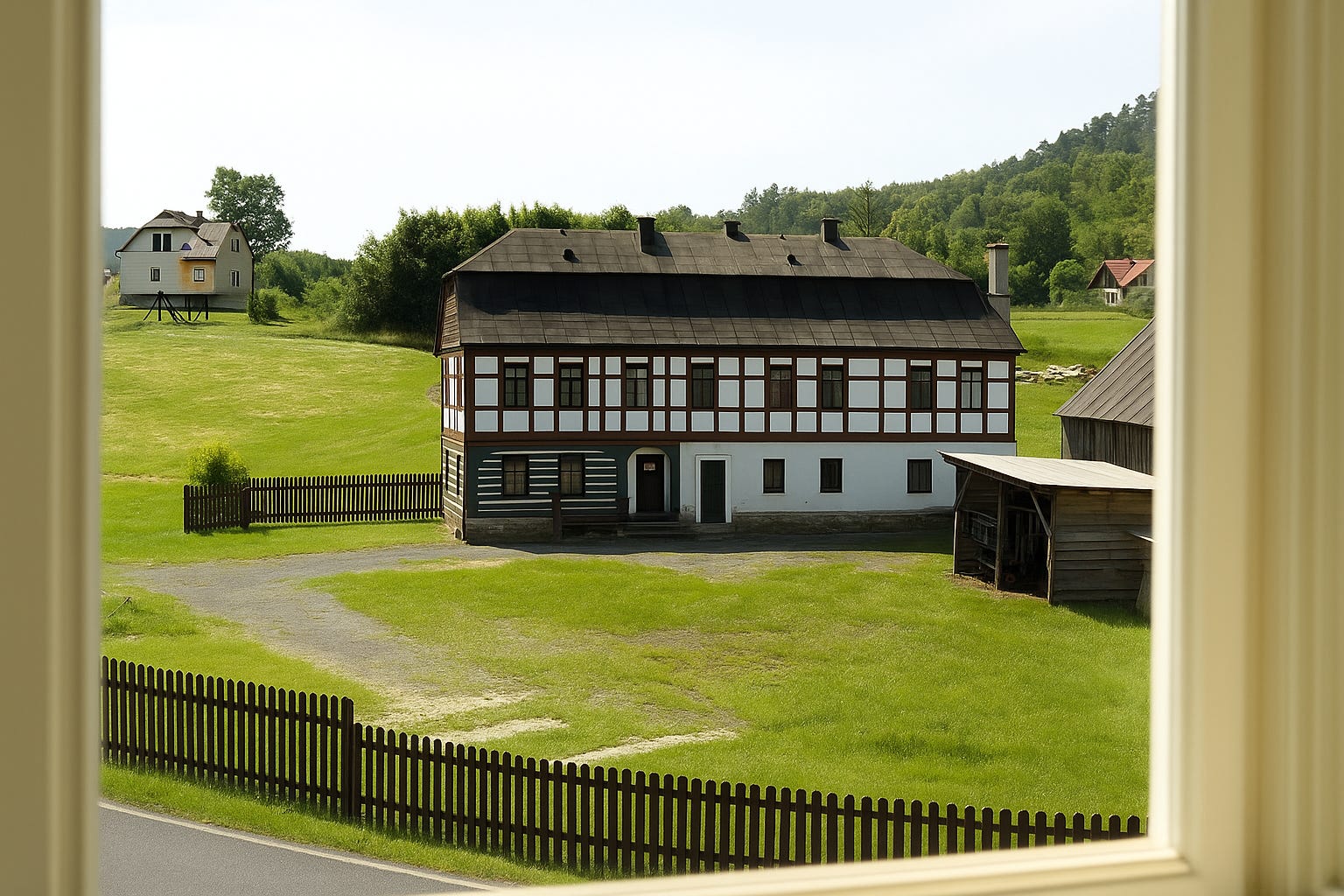
Given the importance and heritage of this town, having four tractors in the front yard in the VFYW seems obtrusive. So for the Reimagined this week, we’ll surgically remove the tractors, the extra shovel/bucket, logs, wood, and miscellaneous other junk from the yard:
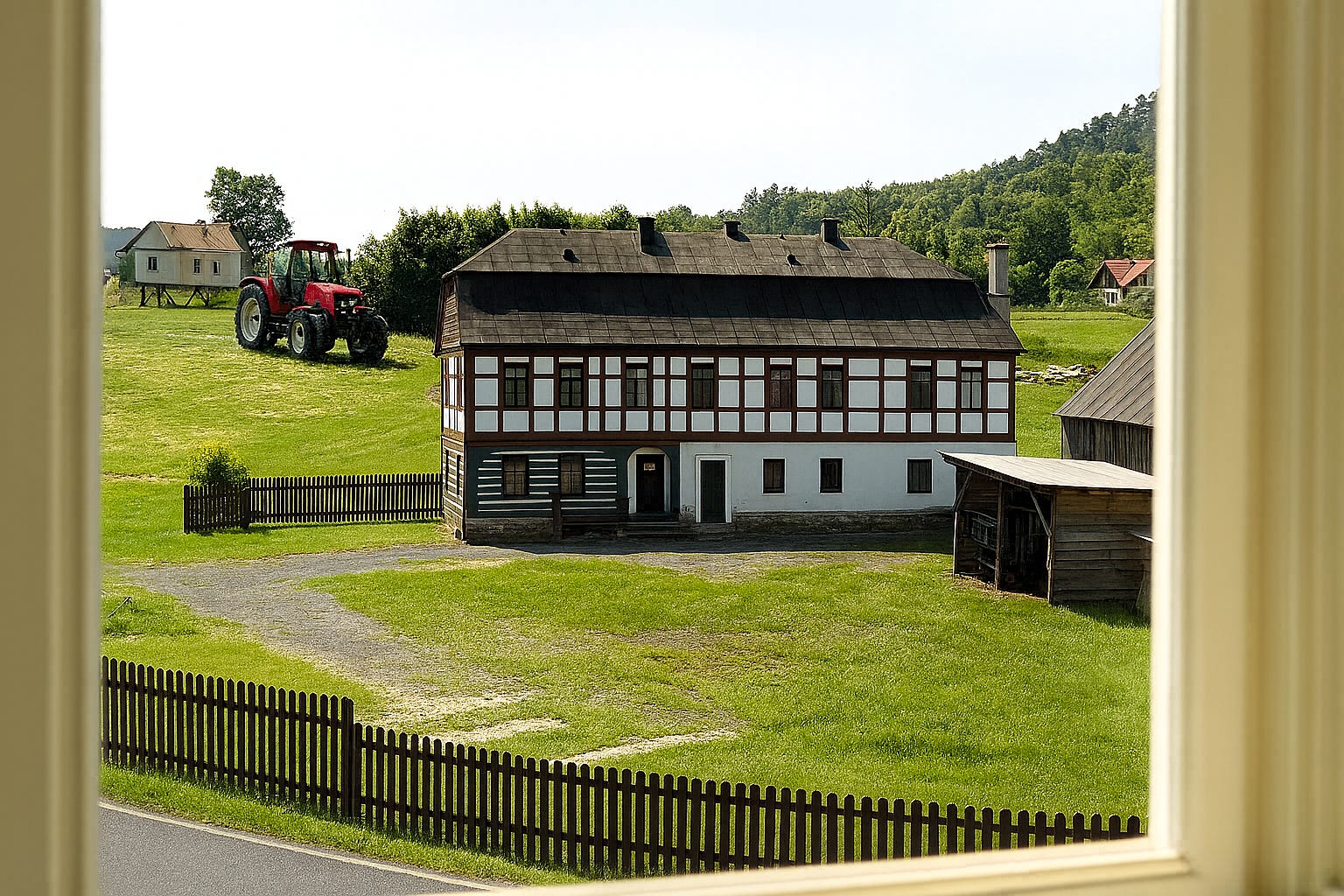
After looking at that for a while, I decided to insert a whimsically enlarged version of the red tractor — not in the front yard, but rather on the hill in back of the farmhouse:
Here’s the the beginning of the entry from the super-sleuth trio in Vancouver, WA:
At first glance, this week’s view seemed to have so few good clues. We started with searching for the “Zetor” tractor and learned that it was founded in the Czech Republic. Without immediately finding similar architecture in Czechia, we started our search in nearby Slovakia and Hungary.
The A2 Team squints:
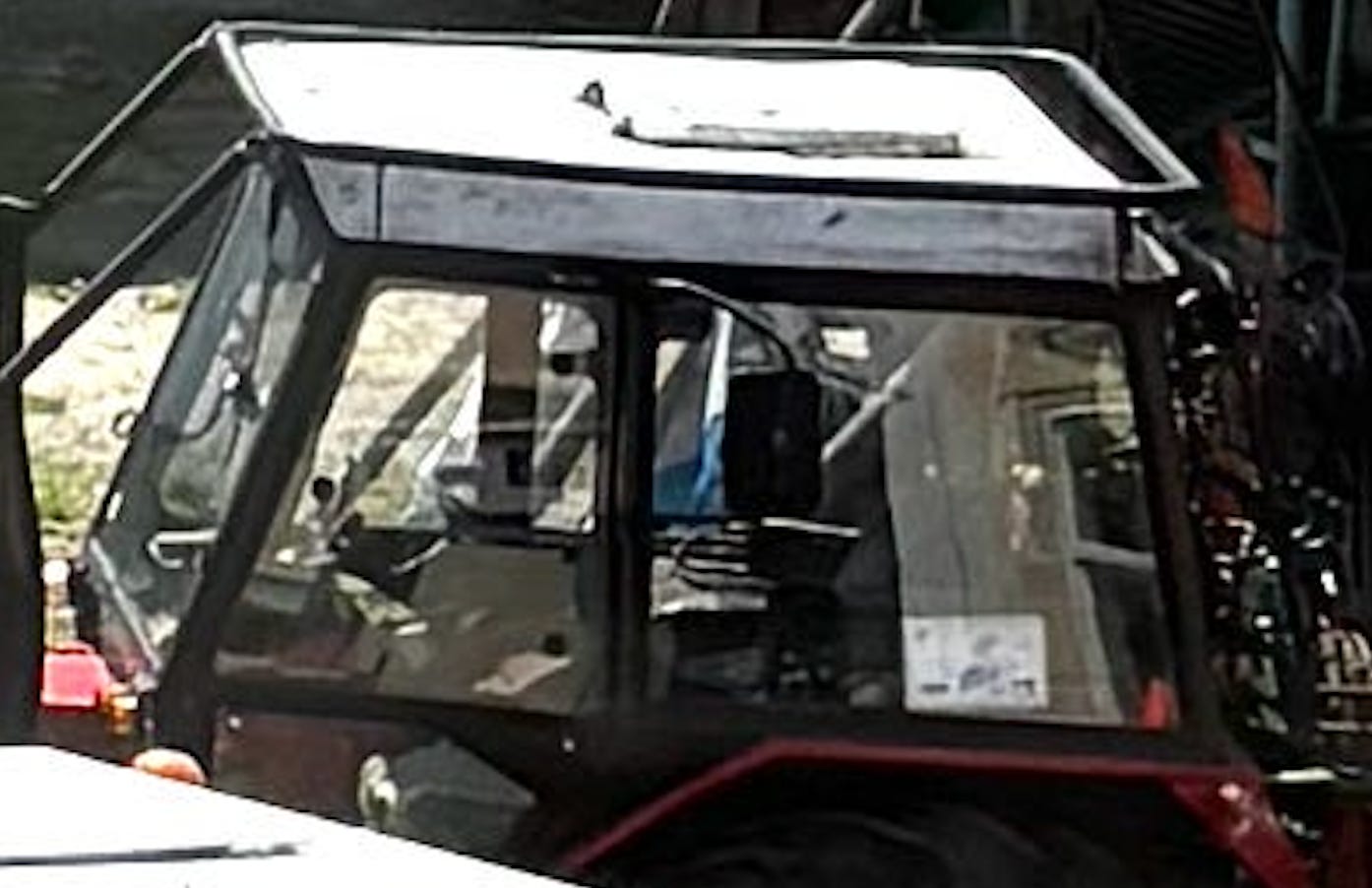
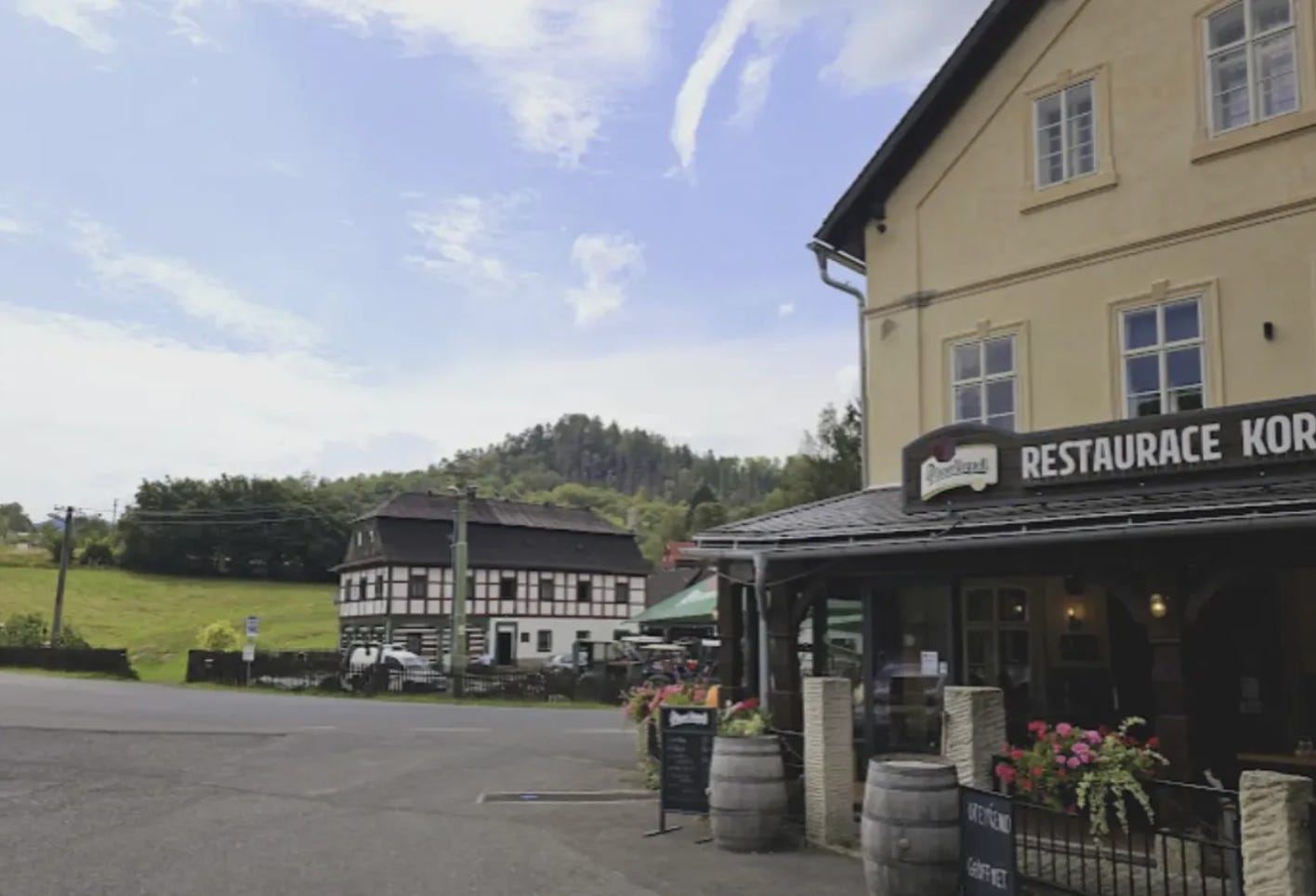
Can I point out that there is a reflection of the façade of the hotel in the window of one of the tractors?
Here’s a newcomer to the contest writing from St Croix:
This view looks a lot like Croatia. I’m not a subscriber, and I just came across your posts today.
Welcome! Giuseppe, our super-sleuth in Rome, names the right region:
This is my favorite type of contest: slowly approaching the destination through increasingly similar landscapes and buildings. In this case, I started with a generic Google search for farms in Central Europe. Forty minutes later, I found the location.
Chini provides a hint and a bird’s-eye view:
Every so often there’s an excellent view (and this week’s is gorgeous) where I nevertheless find myself wishing they had shot the pic from another spot nearby, and this view is one of those. Because a few miles away is the Umgebindehaus-Park Cunewalde, where our viewer could have done the funniest thing ever … a view from a miniature umgebindehaus that would have driven most of us stark raving mad trying to find it.
From our super-sleuth in West Orange:
Hello Chris! What a great contest this week. I love weird European architectural rabbit holes, and this one delivers in spades. Sadly I can’t find the precise location or window, but I’m having too much fun, so I’m going to give myself a few more days to look even if it won’t count as an “official” solve. I’m so close I can taste it!
The key, I think, is the house front-and-center in our view. The half-timbered look recalls the Tudor style in England and contest #433’s Shakespearean setting.
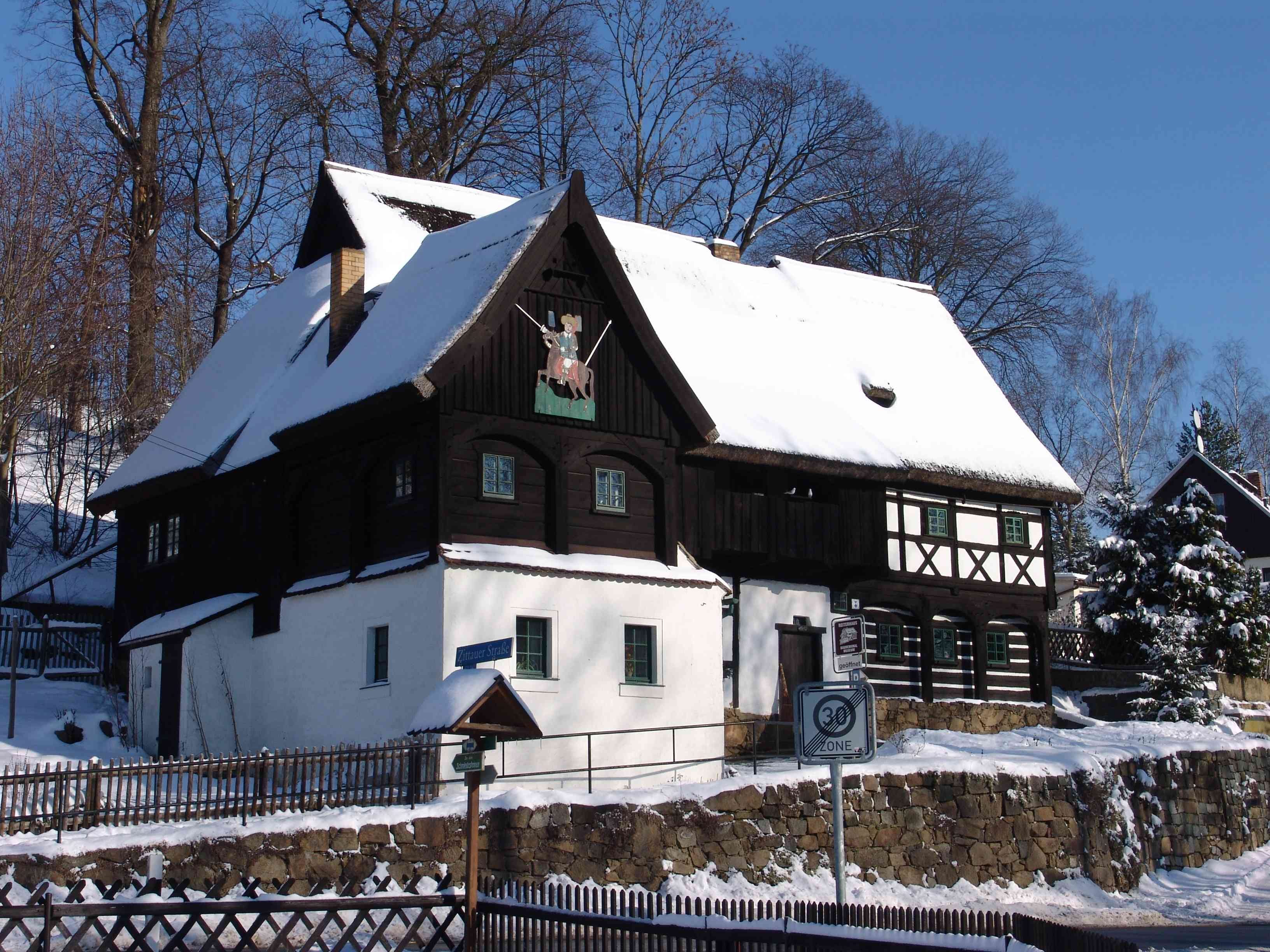
But it’s not Tudor style, and we’re not in England. What we’re looking at is probably a very old example of the Upper Lusatian style — a half-timbered architectural vernacular popular in the three-country region between Germany, Poland, and Czechia. Tantalizingly, the first image in this Wiki article for “Upper Lusatian house” is a damn-near perfect match for the half-timbered house in our view:
The image is of the Reiterhaus, built circa 1670-71 in Saxony’s Neusaltza-Spremberg, and the distinctive horizontal black timbering and black window frames are all fits, despite being pretty rare. But the Reiterhaus is well-maintained, whereas our house looks a little run down. It’s also in a farm setting, and surrounded by Czech-brand tractors.
I’m off to do some street-view searching of north Czechia. Wish me luck!
He followed up:
Wait, do I have two more weeks to solve this??? WELL, Chris, it turns out that two weeks isn’t enough when they’re the two weeks between camp and school or — as Gramsci called it, the Time of Monsters.
I’ve looked at nearly every umgebindehaus (German), domy przysłupowe (Polish), and podstávkový dům (Czech) on Google Images, Maps, and a heap of travel sites, to no avail. Several are close matches but they aren’t quite right. I wonder if this was the wrong clue to follow all along. Maybe farm-stays/“Agroturystyka” with play-sets was the better thread? Maybe I can stay up a little later …
A lot later:
Sadly, Chris, one more week didn’t help either. I still think we’re in Upper Lusatia, but I can’t quite say where. Walking through the region in Google Maps, though, reminded me of a great video game, Pentiment, which I think your readers might like. It’s a murder mystery set in a fictional Bavarian town, Tassing, in the high Renaissance. Players take the role of an artist who stumbles upon a tangled web of deception and death, starting in the town’s monastery and ending (spoiler alert) in a literal walk through the town’s deep history, which traces back to Roman times. As the mystery unfolds, your character develops relationships and uncovers more about the families that define the region.
The title, Pentiment, refers to the afterimage of a prior work of art still visible under a current one. In our game, the town’s Roman and pre-Roman past are the ghostly afterimage that keeps peeking through its “modern” Christian world. The art in the game is gorgeous; the historical research deep (with echoes of and an easter-egg homage to Eco’s Name of the Rose); the music haunting; and the gameplay completely entrancing. I can’t recommend it enough to anyone who loves this era of history and has even a passing interest in video games.
Paging our super-sleuth in Augusta, GA. Back to the architecture theme, here’s our A2 Team in Ann Arbor:
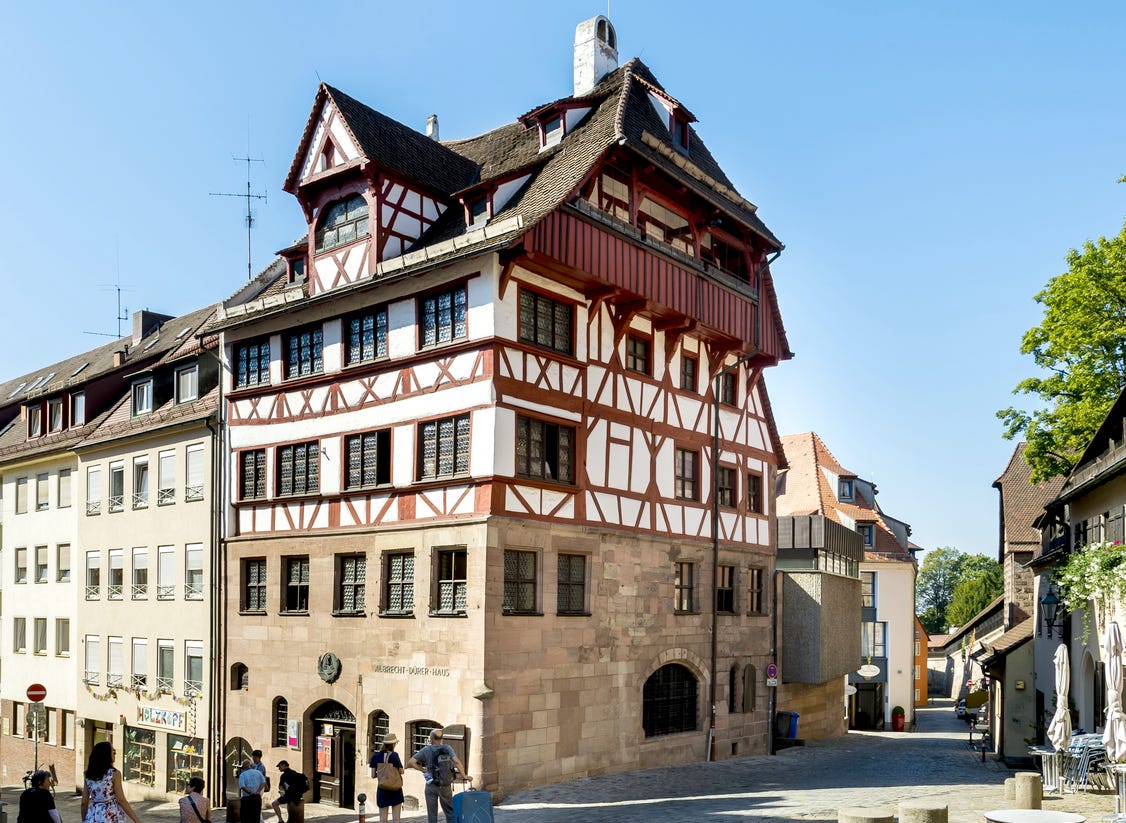
My German roots are in a region that prides itself for a lot of historic half-timbered houses (or Fachwerkhäuser, as we call them), including very famously this one — the residence of the renaissance painter Albrecht Dürer (1471-1528) in Nuremberg:
But the house in the contest photo looks very different, and what is the deal with the two wooden arches left of the door? A search for types of half-timbered houses identifies this as an Umgebindehaus, or podstávkový dům in Czech, or Upper Lusatian House (Oberlausitz), which is popular from Silesia / Schlesien through Lusatia, Bohemia, and Saxony into Thuringia. (See, I’m learning all these English names for European and especially German regions).
The Umgebinde house consists basically of a log cabin as its main living quarter, separated by a transverse hallway from the stable in the back (typically built of rubble stone). The upper floor (if there is one) and the roof don’t rest on the lower floor walls, but are supported by a set of posts around the lower parts (hence Umgebinde, resonating with German to tie around).
With an upper floor, like our example, it looks like this:
This building type emerged during German colonization of eastern Europe, when Germanic settlers brought their technique of timber frame houses to areas where log cabins had been the preferred type. That this hybrid is really advantageous doesn’t quite makes sense to me: why not go for a full timber frame, which provides just as much stability, and is cheaper, because you need less wood? The explanation that in a region with many looms set up in living rooms, the separate timber frame would reduce vibration through the house. But that’s dismissed by experts because it assumes a modern industrial loom instead of the simpler contraptions used in such villages.
Still, an estimated 19,000 examples are still standing — 6,000 in Upper Lusatia alone. So, no wonder that a straightforward Google search for Umgebindehaus doesn’t bring up our example.
Getting to the right place is the Brookline super-sleuth:
I definitely needed the extra time for this contest. I figured out early on that the traditional half-timbered structure in the photo is an Upper Lusatian house found across the region, straddling the present-day borders of Germany, Poland, and the Czech Republic. Although I thought the Zetor tractors might help pinpoint the location, they did quite the opposite, as the company has a strong presence not only in the Czech Republic (where it was established and is headquartered) but also in Germany and Poland, as well as France and other parts of Europe.
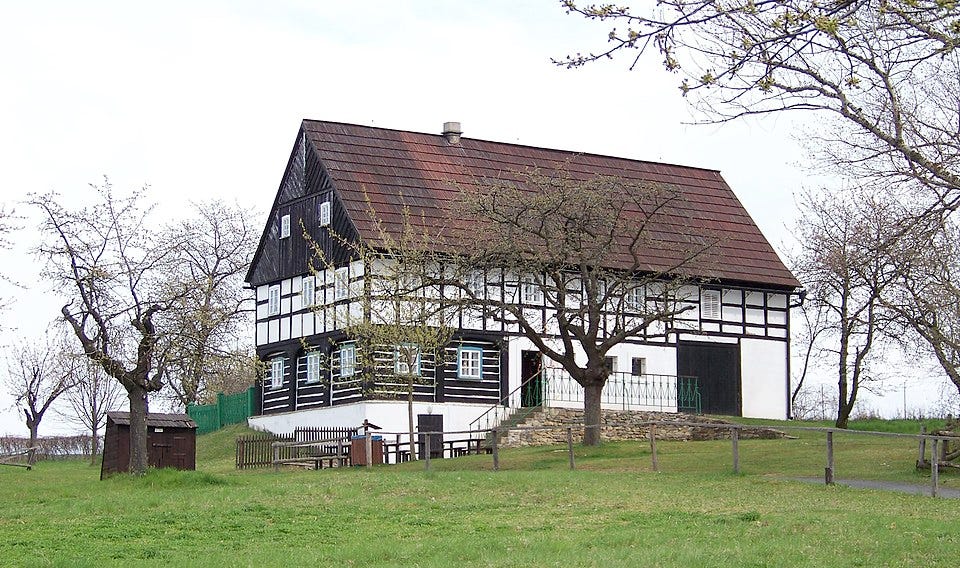
Without much to guide me, I scrolled through page after page of charming images featuring examples of the German umgebindehaus, the Polish dom przysłupowy, and the Czech podstávkový dům, but no immediate matches. The closest I came was a house exhibited at the Open-Air Museum Kouřim that’s described as a “typical example of vernacular architecture from North Bohemia.” The roof was different, but the general color scheme and the patterns around the windows were fairly similar:
The museum said that the house was moved there in 1986 from the hamlet of Kamenné in Jílové village near Děčín in North Bohemia. I poked around the oodles of little towns in this area without much luck. But after looking at many, many more pictures, I finally stumbled upon an image uploaded to Wikimedia Commons by an author named palickap:
That’s the house!
Zooming out from the house is our super-sleuth in Roberts Creek:
A sleuth in Toronto settles on the right country:
The half-timbered farmhouse in front of the window is of a type that I understand is found throughout Bohemia and Upper Lusatia (basically the area straddling the border between the northwestern part of the Czech Republic and Germany and Poland). I’m going with a town in the Czech Republic: Hory.
Another Czech guess:
Teplice? After reviewing some previous contests in the archive, I should add some color to my guess by revealing the thought process. The tractor brand visible is from the Czech Republic, so that’s an obvious giveaway. The architecture of the building has some German influence but could also be found in Czechia. The estate looks a bit run down and the tractors a bit too old to be in Germany. The wood piles are more indicative of Eastern Europe too. Thus, my guess is Teplice.
A sleuth in DC goes with simply, “Hradec Kralove, Czech Republic.” Another goes with Hartmanice; and another picks Nymbur; and yet another picks Bílovice nad Svitavou. Here’s our super-sleuth in Riverwoods:
All I could do was follow the Zetor path — after that, none of my clues got me there. I really feel this is a logging region, not farming. I found this picture in Jílové and thought the exterior resemblance is there:
I’m looking forward to the sleuths locating the correct place and next week’s window, because all good things must come to an end, and we need you and Andrew entertaining us with more content please. (I’m currently enjoying him being interviewed by Johann Hari.)
The Ridgewood super-sleuth writes, “I came across this very charming illustration that I think has the building from the photo in it”:
Continue reading this post for free, courtesy of Andrew Sullivan.